 EN
EN  ES
ES 
Barcelona, the perfect city to be a champion
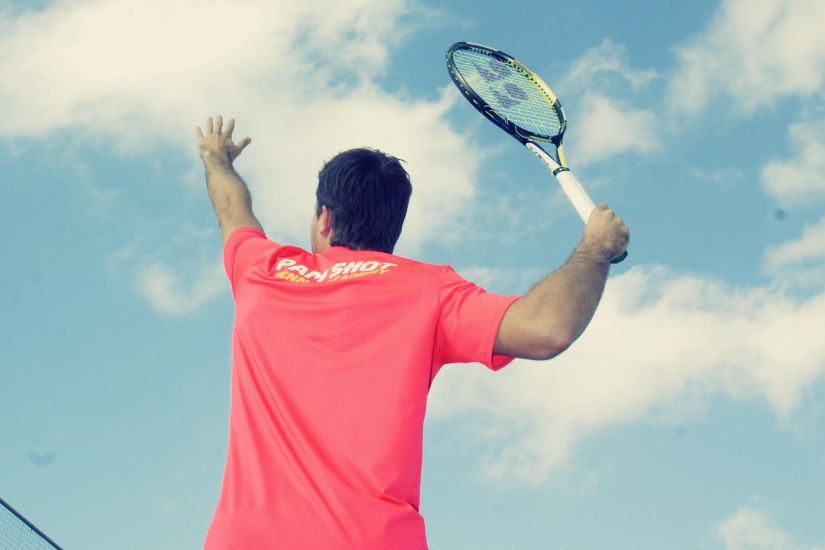
When it comes to getting a good serve, we often overlook small errors which ultimately prevent us of winning more games. Sometimes taking a step back and re-evaluating what you think you know helps you improve, since we’re probably taking things for granted, which creates holes in our technique. Pam Shot, tennis academy in Barcelona, recommends you to ask yourself these seven questions about your serve. You’ll be surprised of how much room for improvement there is.
- How reliable is my first serve?
A major first serve that doesn’t achieve its goal it’s not useful as a weapon. To make you first serve more accurate, divide the service square into three zones of same size from the service line to the net. Serve first to the forehand area, then the center and then to the line. You must successfully serve in each area before moving to the next, once you can complete a series of two consecutives success in every area you will have reached your goal.
- How much pace can I generate?
If your serve lands in the service square but the ball doesn’t reach the fence behind, you need to increase your racket head speed. One trick is to bounce the ball hard into the ground using your racket and see how high it goes. Pronate your forearm as fast as you can, if the ball is in the air for at least three seconds before hitting the ground, your speed is acceptable.
- How effective is my kick serve?
Check if the ball in your kick serve can fall near the singles line on the left side and bounce to fall out of the doubles line. If the ball doesn’t go as far, put your racket upward and sideways beyond the right upper quarter of the ball. This will give it more of a wide kick.
- How effective is my slice serve?
If your serve doesn’t reach the doubles line widely on the deuce side after hitting the singles side line, you aren’t getting enough side effect. Hit the ball in the mark of 3 o´clock and prone your forearm strongly through the blow. That way you should be able to take your opponent off the court.
- How effective is the depth consistency of my serve?
If your serve varies greatly in depth, it’s most likely that your toss is not consistent enough. Try to raise the ball in the air with almost no rotation. It is also possible to experiment with the abbreviated backswing technique popularized by Patrick Rafter. The abbreviated backswing technique simplifies the preparation of the racket and ball toss because the hands stay together at the beginning of the serve and then rise at the same time. The only drawback is when you don’t rotate your right shoulder at the end of the racket preparation because you put stress on your rotator cuff.
- How effective am I at hiding the direction of my service?
If your opponent seems to read your serve like an open book, you are probably revealing the intention of direction of your toss. A good way to solve this problem is to use a semicircular toss. That way it will be much harder for your opponent to find out if you’ll hit a flat, slice or kick serve.
- How is my serve after pressure?
Many players serve well until the score gets critical and they fall apart. They get so nervous that their serve, usually reliable, looses all directional control. To prevent this from occurring, clear your mind, Stop thinking about the point and rather focus all your attention only in performing the desired serve.
As a tennis academy expert in high competition tennis, in Pam Shot we care for our students to receive the best training and their performance raise to their maximum. For more information about our programs and tennis lessons do not hesitate to visit our website and stay tuned to our blog for more tips on technique and lifestyle of a professional tennis player.
Related posts


